NMN has potential of anti-aging in kidney
As the world ages, aging has become a hot research topic.
Recent studies have found that NMN can restore young kidney protein levels in elderly mice, which may have a role in human therapy.

The world's elderly population continues to grow at an unprecedented rate.
A better understanding of the aging process is needed to mitigate age-related diseases.
But not all organs age at the same rate, so it's important for scientists to characterize the aging process in each organ.
By analyzing the changes of aging biomarkers in the kidneys of elderly mice supplemented with NMN (β-Nicotinamide Mononucleotide), Tsinghua University scholar Deng Haiteng and his team found that NMN has the potential to anti-kidney aging, and the research results were published in the journal Aging, providing a new idea for anti-kidney aging in humans.
Older people are more likely to develop kidney disease
Age-related changes in the kidneys include changes in the glomerulus, an important cell unit that filters waste from the blood.
Age-related decline in glomerular function means a gradual decline in waste filtration rates, eventually leading to loss of kidney function.
This impairs the function of the kidneys after injury, leading to a higher sensitivity in older people who suffer from kidney injury and disease.
Deng Haiteng and colleagues investigated the role of NMN in restoring kidney function during aging.
They chose to investigate NMN because recent studies have shown that NMN supplementation may improve age-related organ dysfunction.
NMN is a precursor to the important molecule nicotinamide adenine dinucleotide (NAD+), which plays a role in cellular energy production and maintenance of DNA integrity.
NAD + levels decline with age in both animals and people, a phenomenon associated with age-related declines in organ function, including renal dysfunction.
Many studies have shown that NMN supplementation can increase the amount of NAD+ in the blood and various tissues of older rodents, and scientists are testing whether NMN has the same effect in people.
Can reveal biomarkers of kidney age
Deng and colleagues searched for biomarkers of kidney aging, protein levels that indicate a kidney's age.
The researchers compared the levels of proteins in the kidneys of eight-week-old young mice to those of 96-week-old mice, and came up with 7,208 proteins.
To reduce this, they compared these results with two data sets from other research groups, taking into account proteins present in blood or urine as well as kidney tissue.
The analysis left the researchers with just 27 biomarkers.
NMN injection restores youthful protein levels
The scientists injected NMN into aging mice every two days for four weeks, restoring the protein to youthful levels.
Of the 27 biomarkers, NMN supplementation reduced 16 of the 19 proteins that increase with aging and increased six of the eight proteins that decrease with aging.
This suggests that NMN restored youthful levels of kidney protein.
NMN supplementation also increases the amount of cellular components called peroxisomes, which break down waste products in cells.
The team found that the number of peroxisomes decreased significantly with age.
NMN supplementation effectively increased the amount of peroxidase and reduced cellular markers of kidney damage.
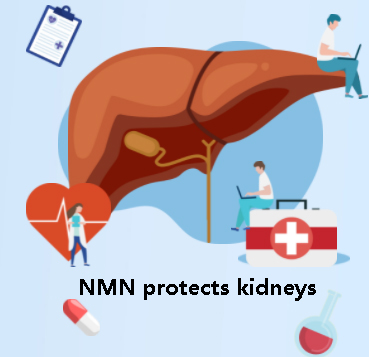
Overall, this suggests that NMN may protect against kidney damage.
"We identified a group of proteins that are differentially expressed in the kidneys of young and old mice and thus can be used as biomarkers of renal aging," Deng and colleagues note in their paper.
"In addition, our results show that aging leads to a reduction in peroxisome and that NMN administration can restore peroxisome homeostasis, suggesting that NMN supplementation may be beneficial for kidney health."
They say their data provide a valuable resource for understanding age-related changes in kidney protein composition.
The study also reaffirms that large-scale studies of proteomics are a powerful approach to aging research.
Future studies will need to examine whether the levels of the 27 biomarkers identified in this study change with age.
If so, it would mean that proteomic analyses in mice during aging could be applied to human studies.
It will also be important to understand whether NMN has the same effect in increasing the amount of peroxidase in kidney cells and can protect older adults from kidney damage and disease.
*Special note - This article is for informational purposes only and cannot replace a doctor's treatment diagnosis and advice. It should not be regarded as a recommendation or proof of efficacy of the medical products involved. If it involves disease diagnosis, treatment, and rehabilitation, please be sure to go to a professional medical institution to seek professional advice.
Previous: Alpha-Lipoic Acid: Synergistic Formulation Delivers Multi-Dimensional Protective Benefits
Next: NMN efficacy and role popularization, sharing real effect of NMN

GSH Bio Tech is China Biological API Manufacturer. China NMN powder suppliers & best NMN raw material Factory.