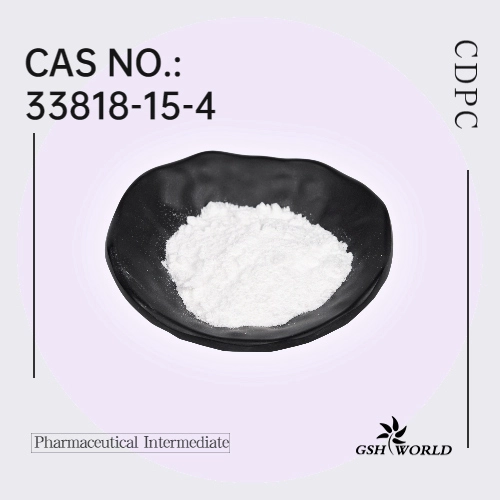


Citicoline: Dual Nutritional Supply in One Compound
As public demand for brain nutrition continues to rise, choline-based ingredients have become a hot category in the dietary supplement market.
Compared with traditional choline chloride and phosphatidylcholine, citicoline (CDPC) has gained high industry recognition due to its unique molecular structure and gentler metabolic profile, supported by a well-established academic framework encompassing physicochemical, toxicological, and population metabolism studies.
Single Ingredient, Dual Nutrition
From a metabolic perspective, orally administered citicoline undergoes complete hydrolysis in the body, simultaneously releasing choline and cytidine—two distinct nutrients that operate through parallel metabolic pathways.
Choline participates in cell membrane phospholipid synthesis and homocysteine metabolism, while cytidine is converted to uridine, which contributes to nerve cell membrane repair and nucleic acid synthesis.
This dual nutritional supply from a single ingredient represents a structural advantage that ordinary choline derivatives do not possess.

Gentle Properties
Animal toxicology data directly demonstrates citicoline's mild characteristics.
Using the median lethal dose (LD50) in mice and rats as the evaluation criterion, citicoline shows higher LD50 values than choline chloride across oral, intraperitoneal, and intravenous administration routes.
When converted to molar concentrations, the difference becomes even more pronounced, with citicoline exhibiting significantly lower toxicity than free choline upon intravenous administration.
Researchers speculate that the intact citicoline molecule does not rapidly release large amounts of free choline in the intestine, substantially reducing acute tolerance risks and making it suitable for broader long-term supplementation across diverse populations.
A More Reliable Ingredient Choice
At the intestinal metabolism level, traditional lecithin and free choline are readily broken down by gut microbiota into trimethylamine (TMA), which is subsequently converted to trimethylamine N-oxide (TMAO).
Current research indicates that citicoline's unique pyrophosphate structure makes it resistant to rapid enzymatic hydrolysis by intestinal bacteria, thereby reducing its potential to generate TMA.
This positions citicoline as a more reliable ingredient choice for choline supplementation, with related hypotheses and comparative data published in authoritative nutrition journals.

Population observational studies have shown a positive association between dietary choline intake levels and memory performance;
however, human intervention trials using free choline and lecithin have yielded inconsistent results.
In contrast, multiple controlled trials have documented positive observable changes in attention and mental reaction speed following citicoline intake.
Long-term trials targeting middle-aged and elderly populations have also accumulated substantial sample data, providing an academic foundation for dietary product formulation development.
From a regulatory standpoint, citicoline holds mature and compliant application credentials.
In 2009, its free inner salt received U.S. GRAS (Generally Recognized As Safe) certification.
In 2014, the European Union officially classified it as a novel food ingredient and established standardized usage dosages:
a maximum daily addition of 500 mg for dietary supplements targeting middle-aged and elderly adults, and 250 mg per single serving for foods for special medical purposes with a total daily amount not exceeding 1,000 mg—making it adaptable for various brain nutrition dietary product developments.
In summary, citicoline combines four core advantages:
compliant food ingredient status, dual nutritional supply, lower acute toxicity, and gentle intestinal metabolism.
It is well-suited for the development of dietary supplement products targeting both middle-aged and elderly populations, making it a preferred differentiated ingredient in the choline nutrition market.
References
Synoradzki K, Grieb P. Citicoline: A Superior Form of Choline?[J]. Nutrients, 2019, 11(7):1569.
*Special note - This article is for informational purposes only and cannot replace a doctor's treatment diagnosis and advice. It should not be regarded as a recommendation or proof of efficacy of the medical products involved. If it involves disease diagnosis, treatment, and rehabilitation, please be sure to go to a professional medical institution to seek professional advice.
Previous: Increase NAD+ 3 ways to reverse age
Next: Daily NMN replenishment: a comprehensive analysis of individual requirements

GSH Bio Tech is China Biological API Manufacturer. China Citicoline powder suppliers & best Citicoline raw material Factory.