NMN: Energy Code of NK Cells
As we age, the immune guardians in our bodies - natural killer cells (NK cells) - gradually lose their vitality and their ability to fight cancer drops sharply.
Scientists have discovered that the decline in NAD+ levels is an important factor contributing to this phenomenon.
As a direct precursor of NAD+, NMN is becoming a secret weapon for restoring the activity of NK cells.
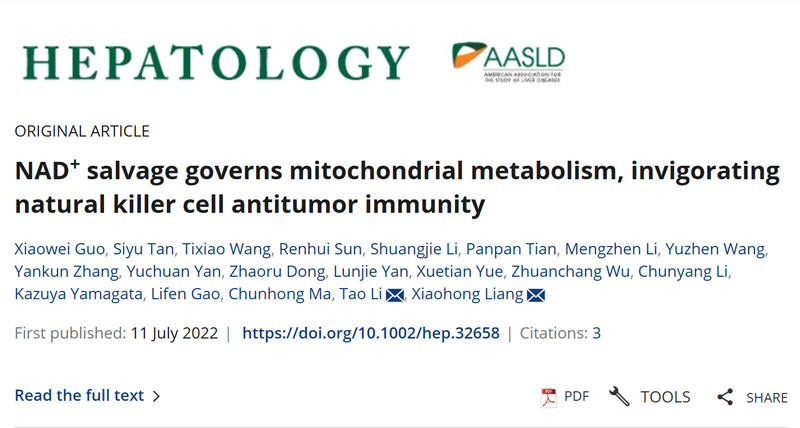
A study published in the top Hepatology journal Hepatology in 2022 revealed how NMN can restore the anti-cancer ability of NK cells by repairing their energy factories - mitochondria.
"all-round warrior" of immune system: NK cells
In the human immune system, natural killer cells (NK cells) can be regarded as the "all-round warriors" of the first line of defense.
They do not require prior sensitization and can independently identify and eliminate abnormal cells such as tumor cells and virus-infected cells.
NK cells directly kill cancer cells by releasing perforin and granzyme, drilling holes in target cells and injecting toxic substances.
At the same time, it can induce apoptosis of cancer cells through the death receptor pathway and also secrete cytokines such as interferon -γ to regulate immune responses.
These cells account for approximately 15% of all immune cells in the blood and are mainly distributed in the peripheral blood, liver and spleen, performing the function of immune surveillance.
Circulating NK cells are usually in a dormant state. Once activated, they quickly penetrate into tissues to attack targets.
fatal crisis of NK cell function degeneration
With the increase of age, the function of NK cells declines significantly.
Research has found that the reduced activity of NK cells in the elderly is directly related to an increased risk of cancer and also leads to an increased mortality rate from infectious diseases.
A 2022 study jointly conducted by Shandong University and Qilu Hospital revealed the mechanism behind this phenomenon:
The tumor microenvironment deliberately inhibits the synthesis of NAD+ in NK cells.
In a mouse model of liver cancer, the expression of NAMPT in tumor-infiltrating NK cells (TINKs) was suppressed (a key rate-limiting enzyme in the NAD+ rescue pathway), resulting in a significant reduction in NAD+ levels.
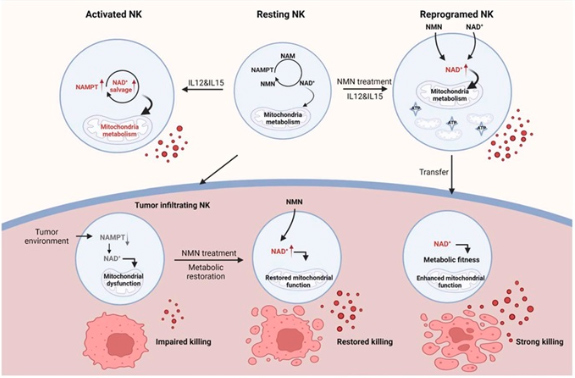
NAD+, as a core molecule in cellular energy metabolism, its deficiency can lead to an "energy crisis" in NK cells - impaired mitochondrial function, decreased expression of respiratory chain-related genes, and broken mitochondria in the cytoplasm.
The paralysis of the energy factory causes NK cells to lose their anti-cancer combat effectiveness.
NMN: The "Energy Code" of NK Cells
NMN (β-Nicotinamide Mononucleotide), as a direct precursor of NAD+, is precisely the key to resolving this crisis.
Research has confirmed that NK cells mainly synthesize NAD+ through remedial pathways, and NMN is precisely the core raw material of this pathway.
Repair mitochondrial function
Supplementing NMN can significantly improve mitochondrial homeostasis.
In the experiment, NMN treatment restored the mitochondrial membrane potential and quality of NK cells and reconstructed the cells' energy metabolism system.
Enhanced killing weapons
After NMN increases the level of NAD+, the ability of NK cells to produce key anti-cancer factors is significantly enhanced
Interferon -γ (IFN-γ) increases, tumor necrosis factor -α (TNF-α) rises, and Perforin secretion increases.
These molecules are the "biochemical weapons" that NK cells use to eliminate cancer cells.
Improve cell survival rate
NAD+ not only enhances the cytotoxic function of NK cells but also protects the NK cells themselves.
It stimulates cell proliferation, reduces cell apoptosis and prolongs the survival time of these immune warriors.
NMN enhances experimental performance of NK cells
In animal experiments, NK cells supplemented with NMN demonstrated astonishing anti-cancer capabilities.
Studies on mouse models of liver cancer have shown that mice treated with NMN NK cells have significantly inhibited tumor growth and a notably increased survival rate.
Experimental data show that
When the ratio of effector cells to target cells was 50:1, the killing efficiency of NK cells in the NMN treatment group was more than 30% higher than that in the control group
The survival period of tumor-bearing mice treated with NMN was extended by 40%
The tumor volume decreased by approximately 50% in the NMN group
These effects stem from the "detoxification" effect of NMN on the tumor microenvironment.
It reverses the inhibition of NAD+ synthesis by tumors, restores the metabolic adaptability and mitochondrial function of NK cells, and enables immune cells to maintain combat effectiveness in the harsh tumor environment.
Future prospects: A New dimension of immunotherapy
With the deepening of research, the strategy of NMN enhancing NK cells has shown multi-dimensional application prospects
Cancer immunotherapy enhancer
NMN may become an ideal partner for CAR-NK cell therapy.
In vitro experiments have shown that NK cells pretreated with NMN perform better in adoptive immunotherapy.
New strategies for antiviral infection
In the research on resisting the influenza A virus, NMN has been proven to significantly enhance the activity of macrophages and NK cells, and strengthen the body's defense against the virus.
Delay immune senescence
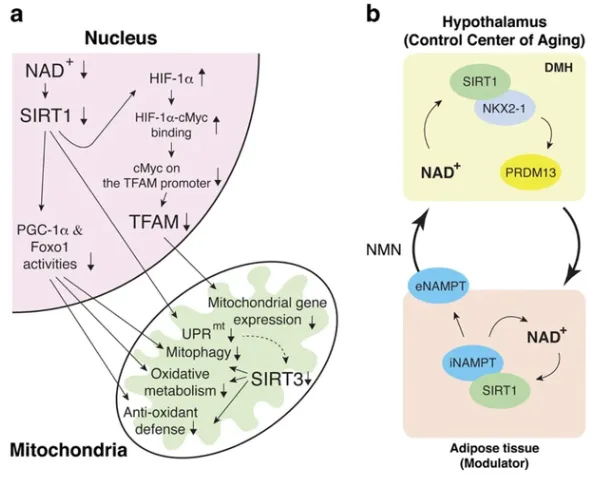
NMN is expected to become a new solution for combating immune aging by increasing NAD+ levels, activating SIRT1 protein, and regulating the proliferation, differentiation and immune response of immune cells.
Intervention for metabolic diseases
The latest research has found that NMN can improve the glucose metabolism of NK cells, which provides a new intervention approach for immune dysfunction in metabolic diseases.
Previous: 10 Truths about NMN

GSH Bio Tech is China Biological API Manufacturer. China NMN powder suppliers & best NMN raw material Factory.